
A new beginning
for a failing liver.
A liver transplant replaces a diseased or failing liver with a healthy liver from a suitable donor — offering an important treatment option for selected patients with advanced liver disease, liver failure and certain liver cancers.
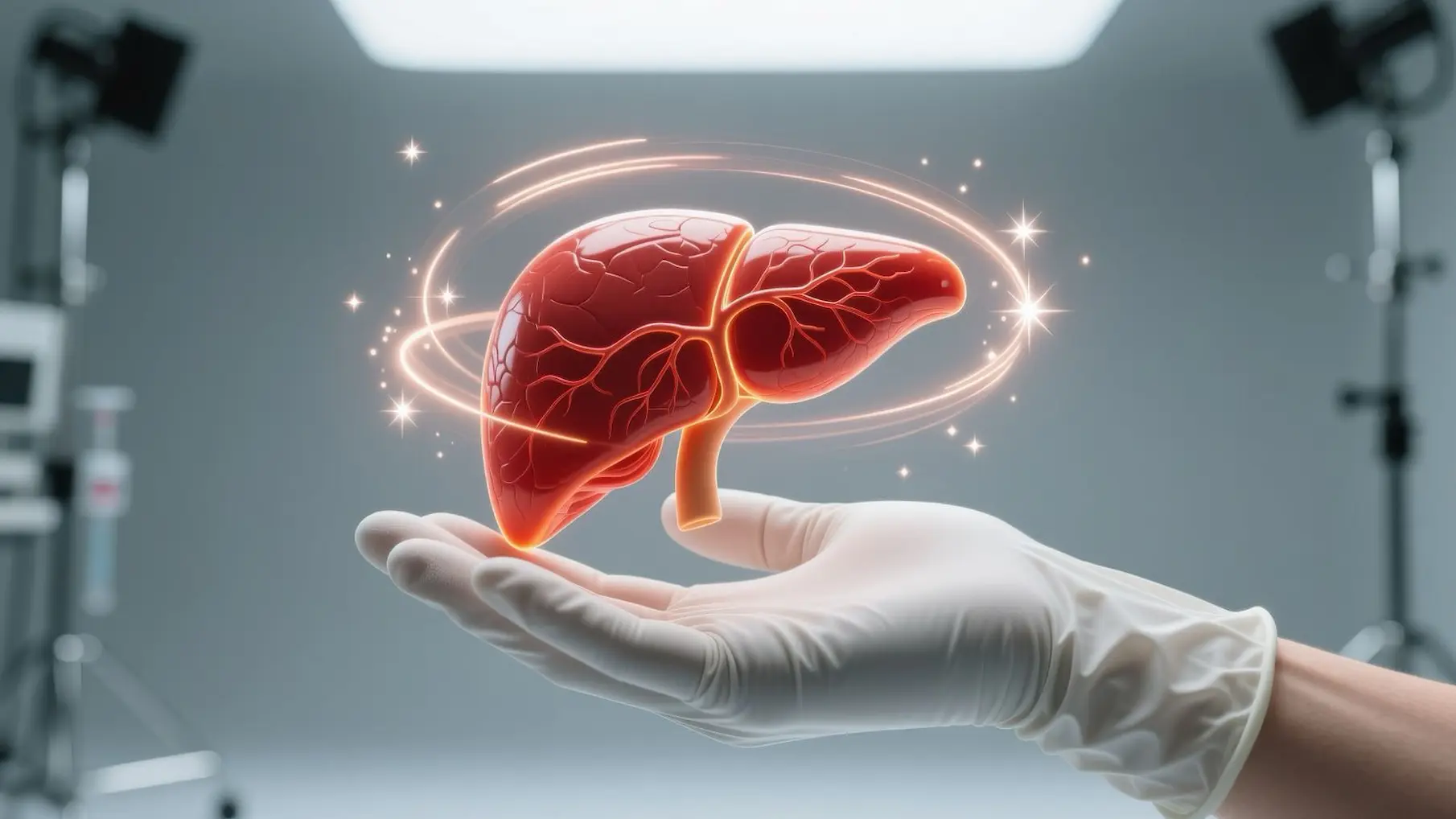
When the liver can no longer support the body, transplantation can offer a new path forward.
A liver transplant is a specialised surgical procedure in which a diseased or failing liver is replaced with a healthy liver from a suitable donor. For patients with advanced liver disease, liver failure or selected cases of liver cancer, transplantation can become an important treatment option.
At Chandan Hospital, Lucknow, Dr. Vipin Pal Singh provides specialised care for patients undergoing evaluation and treatment for liver transplantation, with a focus on comprehensive care throughout the transplant journey.
When is liver transplantation needed?
Not every patient with liver disease requires a transplant. A liver transplant may be considered when the liver becomes severely damaged and is no longer able to perform its essential functions adequately.
Advanced or decompensated cirrhosis
End-stage liver disease
Certain cases of acute liver failure
Selected liver cancers
Serious complications of chronic liver disease
Liver disease that continues to worsen despite appropriate treatment
The decision is based on detailed medical evaluation and the patient's overall condition.
Two paths to liver donation
Liver transplantation can involve either a living donor or a deceased donor.
Living Donor Liver Transplant
In a living donor liver transplant, a suitable healthy donor provides a portion of their liver for transplantation. The liver has a unique ability to regenerate and adapt after donation and transplantation.
However, donor safety is a fundamental part of the process. Detailed medical tests, imaging and anatomical assessment are performed before a person can be considered for donation.
Deceased Donor Liver Transplant
A deceased donor liver transplant uses a liver donated after a person's death, subject to applicable medical and organ-allocation processes.
The transplant team evaluates the recipient's medical condition and suitability while considering the available donor organ.
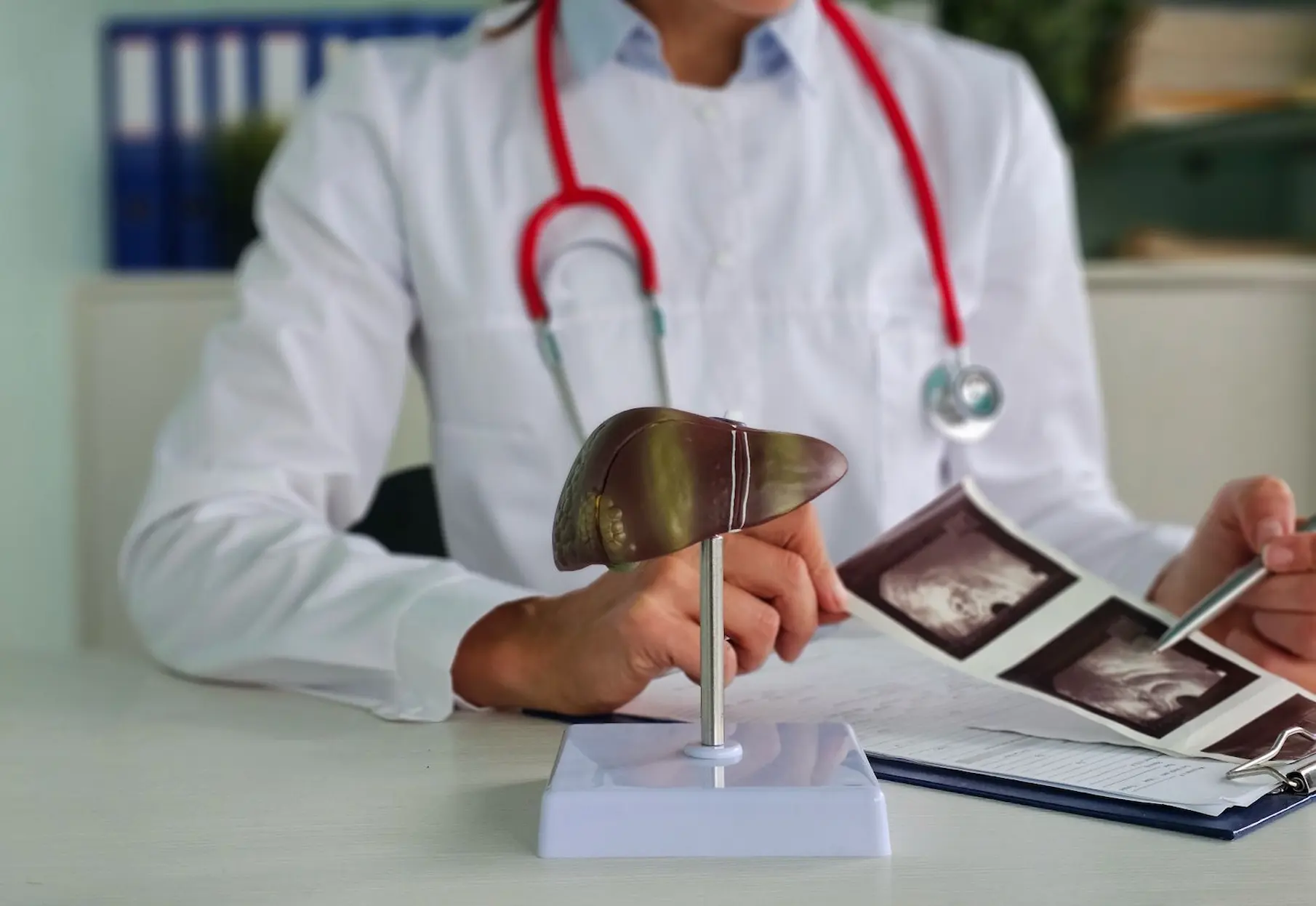
It is the one organ built to give itself a second chance.
Remove up to seventy percent of a healthy liver, and within weeks it can rebuild itself close to its original size — a capacity unique among human organs. It is what makes living-donor transplantation possible at all: a donor's liver regrows, and so, in time, does the portion transplanted into the recipient.
Surgery doesn't replace that ability. It simply clears the way for it — removing disease, restoring blood flow, giving healthy tissue room to do what it already knows how to do.
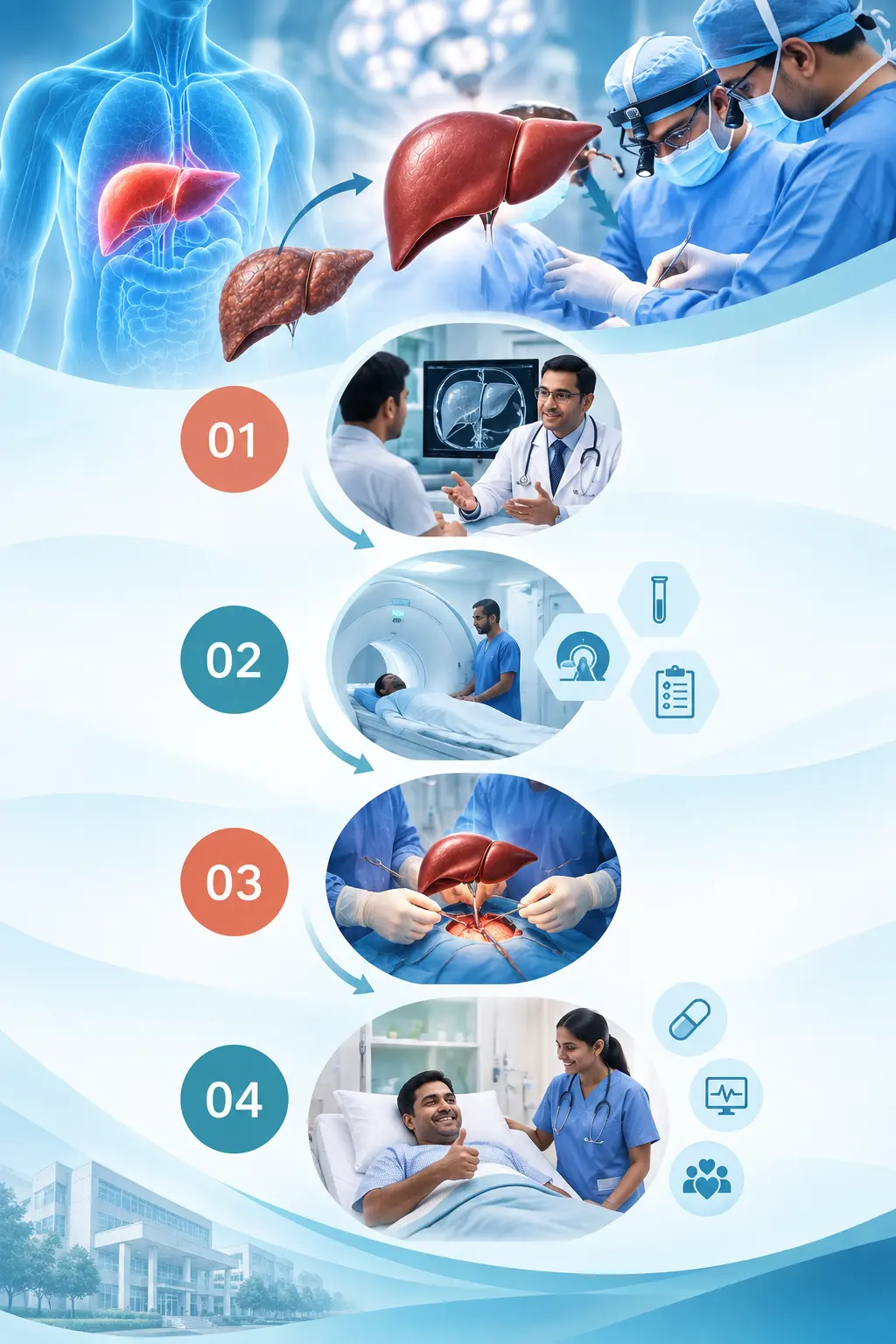
How does liver transplant surgery work?
Evaluation
Detailed liver transplant evaluation helps the medical team understand the severity of liver disease, overall health, possible complications and suitability for transplantation.
Planning
Medical investigations, imaging, laboratory tests and donor assessment when living donation is considered.
Transplant Surgery
The diseased liver is removed and the donor liver or donor liver portion is placed in its position. The blood vessels and bile duct are carefully connected.
Recovery
Structured postoperative care, prescribed medicines and regular monitoring support recovery and long-term transplant health.
Care beyond the operating room
Liver transplantation is not limited to the operation itself. It is a complete treatment journey involving pre-transplant assessment, surgery and long-term follow-up.
Pre-Transplant Assessment
Detailed medical evaluation and imaging to understand disease severity and suitability.
Donor Evaluation
Careful medical and anatomical assessment when living donation is considered.
Surgical Care
Coordinated surgery planned around the patient's specific condition.
Postoperative Monitoring
Structured recovery support and close monitoring after surgery.
Long-Term Follow-Up
Regular follow-up and prescribed medicines to protect the transplanted liver.
A new beginning, with long-term care.
A transplant provides a new beginning, but long-term care remains essential.
Patients need regular medical follow-ups and should take prescribed medicines as advised by their transplant team. Maintaining a healthy lifestyle, following appropriate dietary advice and being alert to possible signs of infection or other complications are also important.
The recovery period varies from patient to patient. Returning to normal activities depends on factors such as overall health, the reason for transplantation and recovery after surgery.
Transplantation is more than an operation.
Liver transplantation is a complex procedure that requires coordinated care from a multidisciplinary medical team.
For patients searching for liver transplant in Lucknow, choosing an experienced transplant team can help ensure that every stage of the treatment journey is carefully evaluated.
Dr. Vipin Pal Singh
Dr. Vipin Pal Singh is a Liver Transplant & HPB Surgeon and Associate Director – HPB Surgery & Liver Transplant at Chandan Hospital, Lucknow. He holds MBBS, MS and DrNB qualifications in Surgical Gastroenterology and has completed a Fellowship in Liver Transplant & HPB Surgery.
With more than 8 years of experience and involvement in more than 500 liver transplant procedures, Dr. Vipin Pal Singh specialises in liver transplantation, liver cirrhosis, liver cancers and other hepatobiliary conditions.
Questions patients often ask
Patients with advanced liver disease, liver failure, certain liver cancers or serious complications may be considered for transplantation. Each case requires individual evaluation.
No. Cirrhosis alone does not automatically mean that a transplant is required. The severity of disease, complications, overall health and other medical factors are considered.
Living donor transplantation requires careful donor selection and detailed medical and anatomical assessment. Donor safety comes first throughout the evaluation process.
Recovery varies between individuals. It depends on the patient's health, type of transplant, complications and response after surgery. Regular follow-up remains important even after initial recovery.
Could liver transplantation be the right path for you?
If you or a family member has advanced liver disease and you are considering liver transplant surgery in Lucknow, specialist evaluation can help you understand whether transplantation is appropriate and what treatment options may be available.